2025年10月14日至17日,由福建海洋可持续发展研究院(厦门大学)(以下简称“闽海院”)与印尼卡渣玛达大学(Universitas Gadjah Mada, UGM)农业学院渔业系联合主办、中国海洋发展基金会支持的“海岸带综合管理与可持续渔业国际培训”在厦门成功举办。来自印尼卡渣玛达大学的11名学者代表与厦门大学海洋领域专家团队齐聚一堂,围绕海岸带综合管理(ICM)、海洋空间规划(MSP)及渔业可持续发展展开深度交流,共探“海上丝绸之路”沿线国家海洋可持续发展合作新路径。
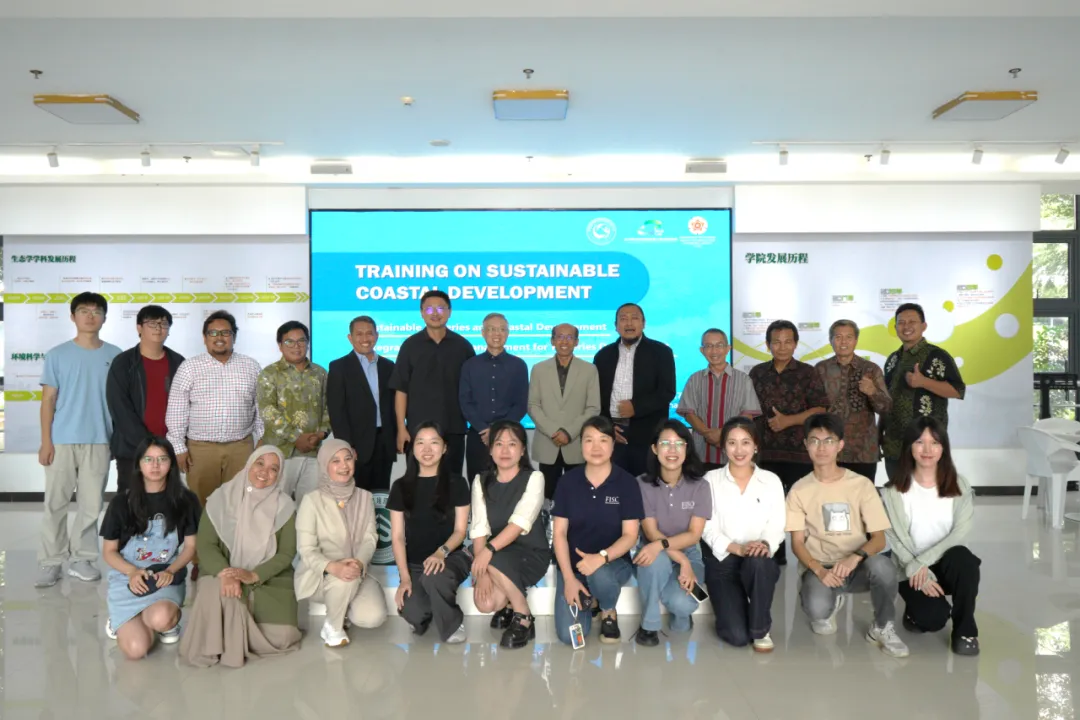
培训班合影
Group Photo of the Training Program
10月15日上午,培训开幕式在厦门大学翔安校区举行。闽海院院长薛雄志教授与卡渣玛达大学渔业系主任Alim Isnansetyo教授共同主持开幕式并致辞。薛雄志院长在欢迎辞中指出,ICM与MSP是统筹海岸带生态保护与经济发展的关键路径。闽海院团队与卡渣玛达大学的交流与合作由来已久,未来希望可以加强双方在相关领域的互动。Alim Isnansetyo主任在开幕辞中介绍了UGM渔业系的学科建设、科研布局及在可持续渔业领域的积累。他指出,此次培训是双方长期合作关系的又一里程碑,期待双方持续深化在科研协同与人才培养方面的合作,携手推动更多创新成果的转化与应用。
本次培训以“理论授课+实地教学”的形式进行。开幕式后首先进入专题讲座环节,薛雄志教授作题为“海岸带综合管理与海洋空间规划的耦合效应”的报告,全面阐释了ICM与MSP的理论体系、方法工具及实施路径,并详细介绍了厦门市海岸带综合管理经验及其带来的社会、生态、经济效益;闽海院副院长游伟伟教授则聚焦“绿色海水养殖技术与可持续蓝色食物供给”,分享了中国在海水养殖低碳转型、藻类碳汇利用、蓝色食物安全保障等领域的技术突破,为渔业可持续发展提供了新路径、新视角。
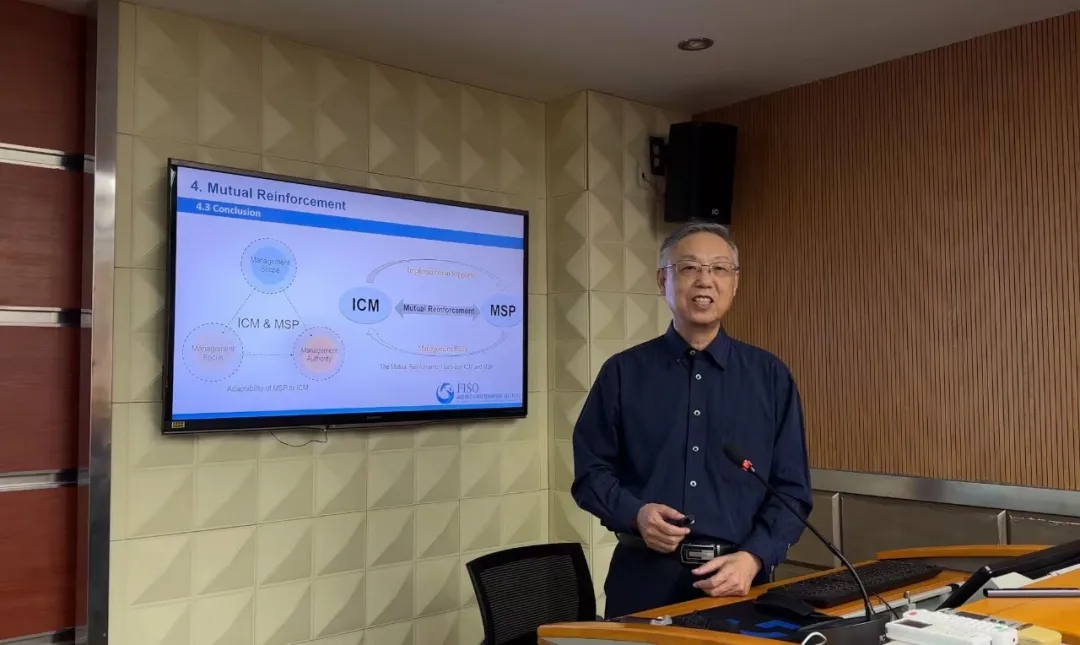
薛雄志授课
Lecture by Prof. Xue Xiongzhi
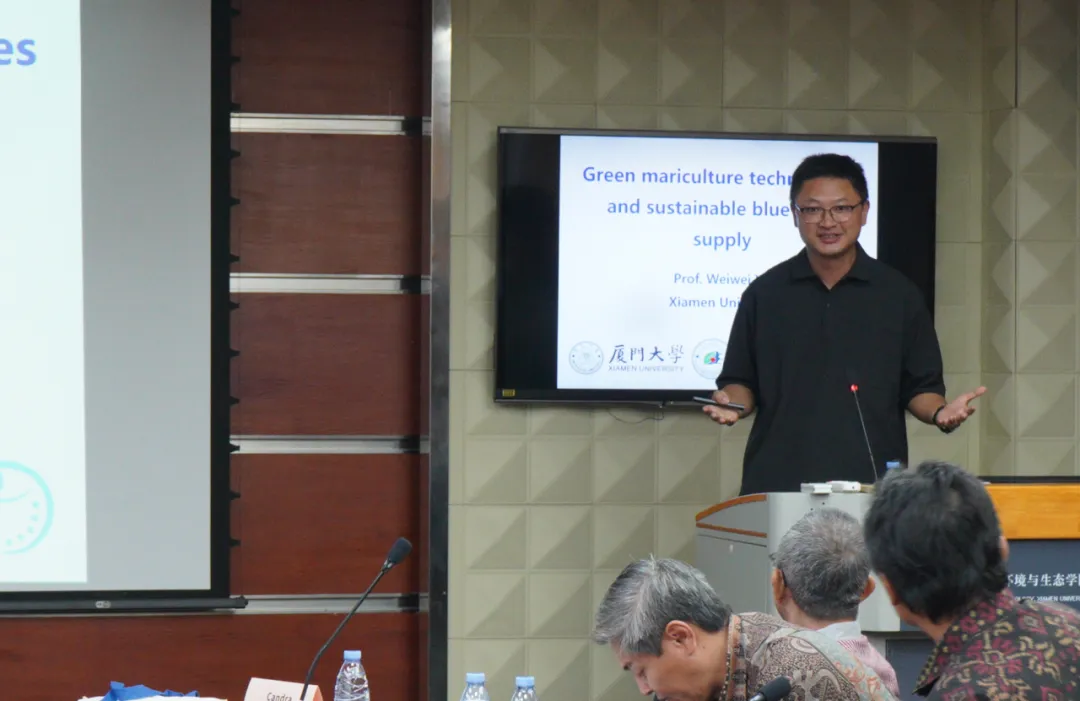
游伟伟授课
Lecture by Prof. You Weiwei
之后,双方围绕合作路径展开专题研讨。UGM渔业系团队详细介绍了团队科研进展,并分析了印尼渔业当前面临的现实挑战;中方团队则结合厦门ICM三十余年实践,提出“生态修复—空间优化—产业协同”的系统治理思路。此外,双方还就在校级合作备忘录框架下共同签署合作协议(MoA)进行了探讨,明确将在联合研究、学术交流、师生互访与能力建设等领域展开深入的合作。
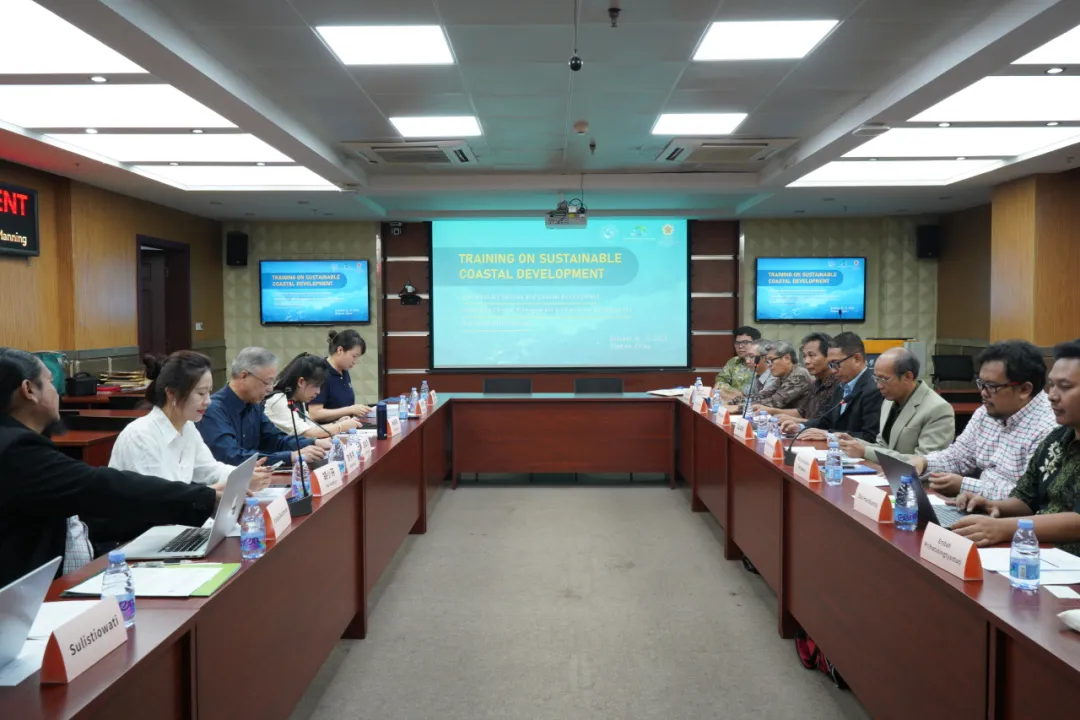
研讨现场
Discussion Session
10月15日下午至16日,参训团队前往厦门多处ICM示范点开展实地调研,将理论知识与实践场景深度结合,了解厦门在人工岸线生态化改造、海岸带灾害防御、污染防治、可持续蓝色经济转型等方面的技术措施与实践经验。
本次培训以理论与实践深度融合为导向,体系化展示了中国海岸带治理的厦门方案,传播了中国海洋与海岸带可持续发展理念及其对渔业可持续发展的促进作用,有效推动了双方在海洋可持续发展领域的相互理解与技术对接,为未来共建合作平台、共享蓝色发展成果奠定了坚实基础。
From 14 to 17 October 2025, the Training on Integrated Coastal Management and Sustainable Fisheries was successfully held in Xiamen. The event was co-organized by Fujian Institute for Sustainable Oceans (Xiamen University) (referred to as “FISO”) and the Department of Fisheries, Faculty of Agriculture, Universitas Gadjah Mada (referred to as “UGM”), with support from the China Oceanic Development Foundation (CODF). Eleven participants from UGM joined FISO team to engage in in-depth exchanges on Integrated Coastal Management (ICM), Marine Spatial Planning (MSP), and sustainable fisheries, exploring new pathways for cooperation on marine sustainability among countries along the Maritime Silk Road.
On the morning of 15 October, the opening ceremony was held on Xiamen University Xiang’an Campus. The ceremony was co-chaired by Prof. Xue Xiongzhi, Director of FISO, and Prof. Alim Isnansetyo, Head of the Department of Fisheries at UGM. In his welcome remarks, Prof. Xue emphasized that ICM and MSP provide essential approaches for balancing ecological protection with economic development in coastal zones. He valued the longstanding partnership between FISO and UGM and expressed hope for even stronger collaboration in the years ahead. Prof. Isnansetyo, in his opening address, introduced UGM’s disciplinary development, research strengths, and achievements in sustainable fisheries. He highlighted the training program as a new milestone in the partnership between the two institutions and expressed strong expectations for deeper cooperation in joint research, academic exchange, talent cultivation, and the translation of innovative outcomes into practices.
The training combined theoretical instruction with field studies. Following the opening ceremony, the program began with a series of thematic lectures. Prof. Xue delivered a lecture titled "Mutual Reinforcement Between Integrated Coastal Management and Marine Spatial Planning," providing a comprehensive overview of ICM and MSP frameworks, tools, and implementation pathways, along with an in-depth introduction to Xiamen's ICM experience and its social, ecological, and economic benefits. Prof. You Weiwei, Vice Dean of FISO, presented on "Green Mariculture Technologies and Blue Food Supply," sharing China's latest advances in low-carbon aquaculture, macroalgal carbon sinks, and blue food security, offering fresh perspectives for sustainable fisheries development.
A dedicated discussion session followed, during which the UGM delegation outlined their research progress and analyzed major challenges currently facing Indonesia’s fisheries sector. Drawing on over three decades of ICM practice in Xiamen, the FISO team proposed an integrated governance approach centered on "ecological restoration, spatial optimization, and industry coordination." The two sides also discussed the next steps in formalizing an institutional MoA under the umbrella of university level MOU between UGM and XMU, agreeing to deepen collaboration in joint research, academic exchange, faculty and student mobility, and capacity building.
From the afternoon of 15 October to 16 October, the participants conducted field visits to several ICM demonstration sites across Xiamen, integrating theoretical learning with on-site observation. The visits provided first-hand insights into Xiamen’s practices in ecological shoreline restoration, coastal disaster prevention, pollution control, and blue-economy development.
Anchored in the integration of theory and practice, the training program presented Xiamen’s approach to coastal zone governance, promoted China’s concepts and methods for sustainable oceans and coasts, and demonstrated their relevance to sustainable fisheries. The program strengthened mutual understanding, enhanced technical exchange between the two institutions, and laid a solid foundation for future cooperation platforms and shared achievements in blue development.